Showing posts with label Blue Grosbeak. Show all posts

Monday, June 13, 2016

Birding Hard in SEAZ (Day 4)

Here it was, the last day of our triple attack on SEAZ! Walker woke Dalton and I up at 4:30 A.M. and drove us over to Santa Rita Lodge, so we could search for the Plain-capped Starthroat which has eluded Dalton and I for days (Walker got it a few days ago)! Before we even got off of Proctor road Walker spied a pair of Montezuma Quail sitting frozen in the middle of the road!

Montezuma Quail


Walker dropped Dalton and I off at the lodge and then drove back down to Proctor road where he caught up on some well-needed rest. Dalton and I were the first people to arrive at the lodge. We waited for over an hour without luck. One hour then turned into two, and then 3. Now I, as a birder, am use to doing a lot of hiking and other energy consuming activities to find birds. But sitting was actually harder than hiking a mile or two or biking around my patch! Dalton and I had been sitting down watching the same feeders for over three hours without our bird! Luckily there were many cool birds like this colorful and cooperative Blue Grosbeak.

Blue Grosbeak

Exhausted by hour hardcore feeder watching, I had about lost hope in us finding the Plain-capped Starthroat. However, while I was out of it I heard a chip note from a large hummingbird coming from one of the feeders and sure enough it was Dalton and I's lifer Plain-capped Starthroat!!!

Plain-capped Starthroat


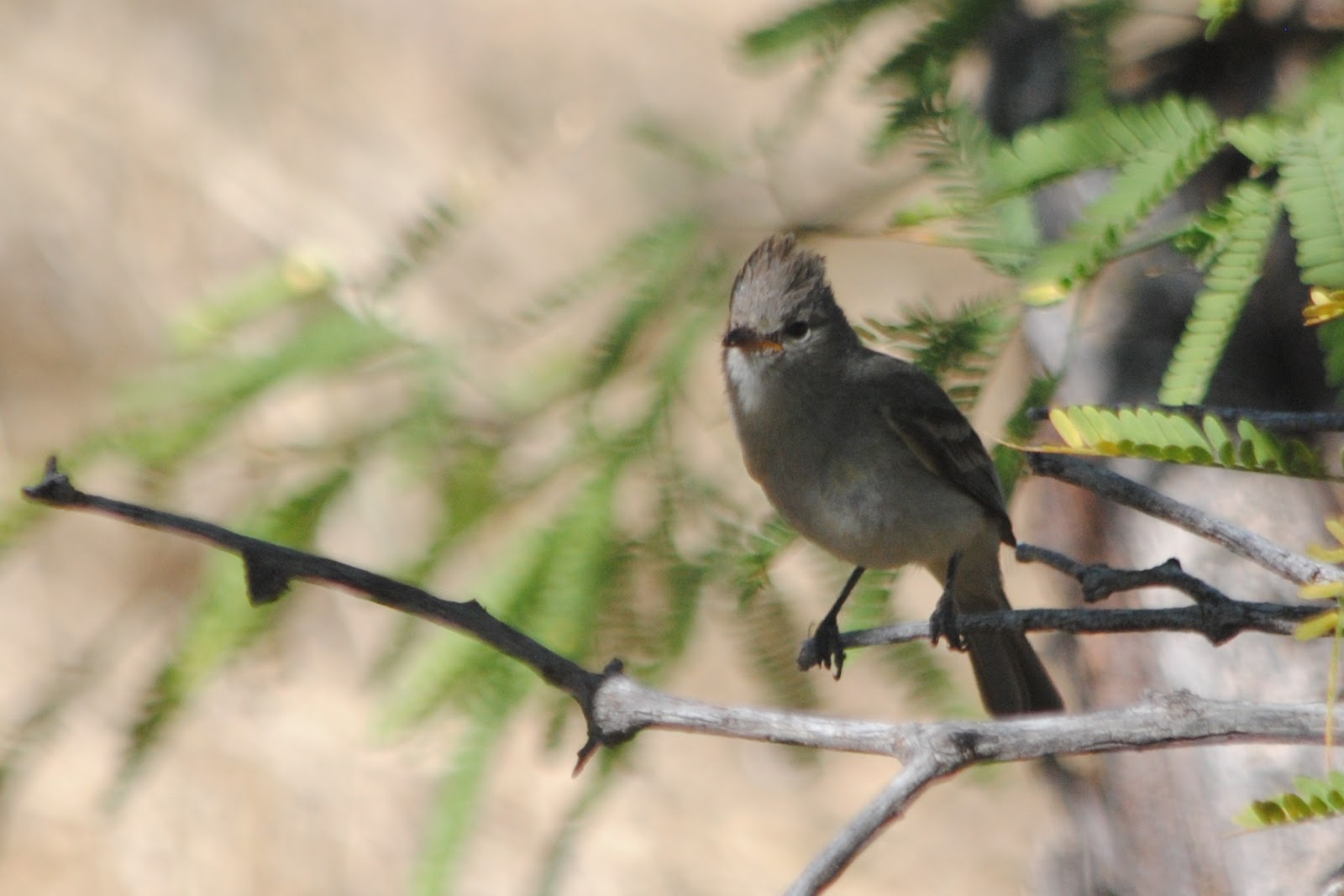
Our observation was short but everyone at the feeders got great looks at this code 4 rarity! Once the hummer flew off Dalton and I were jumping up and down in excitement! We hiked down to Proctor Road to proclaim our victory over Walker. After he congratulated us on our success I heard a Northern Beardless-Tyrannulet calling from fairly close. In a couple minutes I got my photo-lifer NBTY!

Northern Beardless-Tyrannulet


After packing up camp, the three of us drove up to the top of Madera Canyon to crush some trogons. Upon arriving at a nest we had great views of a male.

Elegant Trogon


After crushing hard on Mr. Trogon we ended our SEAZ bird hard trip. Before getting back to my house in Buckeye I showed Walker some Burrowing Owls which we also crushed.

Burrowing Owl


This Burrowing Owl ended our AZ bird hardness...or did it? Only an extremely rare bird would change this. Stay tuned to find out what might have changed our plans...

Wednesday, June 24, 2015

My First Young Birder's Camp (Part 2)

After our second day of birding, I again set my alarm for five in the morning so Walker and I could get an early start to our last day of the camp and bird hard! Before we began birding we were joined by another one of the young birders. As soon as we walked down into the creek behind the Research Station there was a flock of Mexican Jays mobbing us.

Mexican Jay--With some bling-bling in his wrists!

Even though we were birding hard we couldn't seem to find any Buff-breasted Flycatchers! Before long our hour was up and it was time for us to make a quick stop by Cave Creek Canyon--South Fork where we would once again try for Elegant Trogons. To no surprise we ended up unsuccessful, but bird numbers were a lot higher than the previous day due to it being in the morning. After returning back to camp and eating lunch we drove over to Stateline Road. Stateline Road it is right on the border of New Mexico and Arizona. Walker and I were exited to bring our NM state lists from 0 to over 12. This stop was fairly short and unproductive but we made the most of that ten minutes! Our next and last stop of  camp was in the town of  Portal where we basically walked up the road and checked out a few feeders. While most everyone took a bathroom break I birded around the area and picked up quite a few good birds.

Pyrrhuloxia

Blue Grosbeak


Barn Swallow

 Bronzed Cowbird


As I write this post the brutal thought still goes through my head that we missed AZ's first record of Clay-colored Thrush by a mile, A MILE!!!!!!! No, I am not fooling with you birders, someone just reported a Clay-colored Thrush in their yard in Portal a few days ago! After a little while Mr. John Yerger spotted yet another owl, only this one was a Western Screech on its day roost.

Western Screech-Owl


Once we headed back to the Station we ate lunch and everyone said their goodbyes. However, Mr. Ford and I were not quite done birding yet! We had plans to go birding at Madera Canyon for a little while before heading back to Buckeye. On our way to Madera I was pretty tired (first time I've ever been tired on a birding trip!) but that all changed when we stopped by a gas station and I bought a forty-some ounce cup of soda and gulped it up! When we arrived at the lower elevations of Madera Canyon we stopped in hopes of finding Boteri's and/or Cassin's Sparrows. It didn't take me long to find my 4th lifer of the trip, a Boteri's Sparrow!

Boteri's Sparrow


We heard at least two or three other Boteri's calling or singing but they kept themselves hidden. We didn't hear or see any Cassin's Sparrows but an awesome surprise came when I was listening and I heard the "kit kerr, kit kerr, kit kerr" call of the Scaled Quail (lifer and target bird)! But the area where I heard them from was fenced off, so I didn't try much on attempting for a visual. We then made a short stop at the Santa Rita Lodge where I happened to look down and see a female Varied Bunting, but by the time it hit me that it was a Varied the bird had hopped into a thick bush.

Varied Bunting-- Lifer #7 of the Trip!!!

While we watched the hummingbird feeders in hopes of a Mexican Vagrant flying in we talked with a few people about an area where they have had good luck on Black-capped Gnatcatchers and after getting some directions we found ourselves along with another couple of birders who were from Ohio at the parking lot of our last birding destination of the trip! The couple said that the BCGN was one of their target birds for their AZ trip so the pressure was on to find this bird. In the past I have only seen this species once and it was a female that was pointed out to me as she sat on her nest, so I have never actually seen them doing much. The lady who told us about the birds said that the BCGNs are usually about a mile down the trail but we didn't exactly have enough time to hike a mile so we were pretty much winging it. As we were hiking along the trail I heard a Black-capped Gnatcatcher call, we waited to see if the bird would come out of the thick brush but it didn't. While we were waiting for the gnatcatcher we had amazing views of a couple of Dusky-capped Flycatchers.

Dusky-capped Flycatcher


Losing the gnatcatcher was pretty disappointing but we decided to hike further. Our group then started to break up but everything changed when I spied the bird low in a mesquite!

Black-capped Gnatcatcher

I yelled "Guys I have the bird!" and before long we all had great views and even a few okay photos of the adult male Black-capped Gnatcatcher as it actively fed in front of us.

Black-capped Gnatcatcher


The BCGN is a rare but increasing gnatcatcher that resides in Mexico and now, several areas in southeastern AZ. To identify the Black-capped from its more common Black-tailed and Blue-gray cousins it is best to use its all white undertail, long bill, and all black mask (with no white at all above and usually below eye). Seeing this bird was an awesome way to end the trip and before we reached the car I even had brief views of another!!  A huge thanks goes out to my Mom and Dad, Mr. Tom, Mr. Ford, Walker, and the trip leaders for making this happen and making it fun!!! A weekend I will remember always " My first Young Birders Camp".  I would encourage any, especially novice young birders to look it up and go next year.

Thursday, May 28, 2015

Sunflower and Mt. Ord--The Trek for #300 Begins!!!

After adding the Bronzed Cowbird as my 299th bird for Maricopa County I have been dying to see #300, and it just so happened that I had a trip planned to the Sunflower area and Mt. Ord just two day after finding #299. Mt. Ord holds a few birds that I still need for the county including: Steller's Jay, Northern Pygmy-Owl, Northern Saw-whet Owl (which would also be a lifer), and Calliope Hummingbird. So in hopes of finding at least one of those birds Mr. Ford, Mr. Paul, my Mom, Alexia, and I drove to Sunflower and Mt. Ord.  The Sunflower area is best known for its Zone-tailed and Common Black-Hawks that nest there every Summer. We arrived at Sunflower off of Old Beeline Highway at 7:00AM and birded the area for about two hours before driving up to Mt. Ord. As soon as I stepped out of the car I could hear many birds calling. The Blue Grosbeak is one of the many colorful birds that can be seen at this beautiful creek.

Blue Grosbeak

I didn't take as many photos as I should have, I was more focused on getting everyone else the best views and photos of as many birds as possible. Lesser Goldfinches had to be the most numerous species of the day.

Lesser Goldfinch

Before long we finally saw our first flyover hawk, and it was a Zone-tailed!

Zone-tailed Hawk


Later on during our hike we found a female ZTHA on her nest.

Zone-tailed Hawk

A Gray Vireo spiced things up a little as it sang from the hillside.

Gray Vireo

Everyone was shocked at the amazing views we had of this drab-songster but the GRVI seemed to be very showy throughout the day. After watching some of the very colorful birds that can be seen in Sunflower we made our way over to Mt. Ord. Our first stop was on the Lower Slopes which offers excellent chaparral habitat for breeding Black-chinned and Rufous-crowned Sparrows, Spotted and Canyon Towhees and more Gray Vireos. One of the first birds I heard when I stepped out of the truck was a Black-chinned Sparrow giving its bouncing-ball song.

Black-chinned Sparrow


The Black-chinned Sparrow is not a bird I get to observe often enough, but when I do it's definitely a treat. After observing and photographing the BCSP we then walked a little ways down the trail to where I could hear a couple of Rufous-crowned Sparrows singing, and before long one of the birds were in view.

Rufous-crowned Sparrow

The views were distant so Alexia and I decided to hike up and around the sparrows so we could get better looks and photos, and it worked!

Rufous-crowned Sparrow


We also had awesome looks of a Gray Vireo singing nearby.

Gray Vireo


We left the Lower Slopes of Mt. Ord more than satisfied, and drove up to the where the first stand of ponderosa pines begin, at the 1688 Trail. The 1688 Trail is my favorite stretch of Mt. Ord to cover, because the whole three miles of this trail are in Maricopa County. It covers just about all of the habitat zones that can be seen on the mountain and offers abundant bird life throughout the day and year. Alexia and I did some hiking up one of the drainage's while Mr. Ford,  Mr. Paul, and my Mom stayed along the trail. As soon as we started birding I spied a Painted Redstart hopping all over the place!

Painted Redstart

The Painted Redstart can be one of the most entertaining birds to watch, as it flicks its tail and wings along the bark of trees in search of insects. This bird that I saw would even hang upside-down while it was gleaning!

After watching the redstart we spied another warbler, the Grace's. The Grace's Warbler is a treetop lover and can be challenging to photograph at times. But after many attempts I finally snapped a few decent shots.

Grace's Warbler


As we hiked up the drainage, I found a few Pygmy Nuthatches hanging in the treetops. In past years the Pygmy Nuthatch was a hard bird to find in Maricopa County. About two or three years ago, these tiny tree-hugger's have started to breed at a few spots in the county, thus expanding their range. After exploring the drainage we decided to head back to the car to where we would then drive towards the top of Mt. Ord to the Higher Slopes. Most of this area is in Gila County but after observing many maps on the county lines I have become familiar with where the trail crosses the county lines. Once we arrived at our final destination I quickly found a pair of Spotted Towhees with a fledgling.

Spotted Towhee

The Hepatic Tanager seemed to be everyone's target bird for this area and they didn't leave us hang'in!

Hepatic Tanager--male


Hepatic Tanager--female

Once we reached the top of Mt. Ord where the towers are, we enjoyed scenic views of Maricopa and Gila Counties. On our way back down from the top we saw a few more birds including an Olive-sided Flycatcher and an Olive Warbler.

Olive-sided Flycatcher

Olive Warbler

No, I didn't end up finding #300 for Maricopa County on 5/23/15, but I did see some awesome birds and made some memories, so I would call it yet another awesome day of birding!!! But wait, my search for #300 isn't over yet, I still have one more spot to go before the week ends. Will I find #300? Or will I have to wait even longer for that milestone? Stay tuned to find out!